
SEO is the solution if you’ve ever puzzled how certain websites appear at the top of Google while others appear to be invisible. The process of making a website better so it appears higher in search engine results pages (SERPs) is known as search engine optimisation, or SEO. However, improving the online search experience for users is more important to SEO than merely appeasing algorithms. We’ll go over what SEO is, why it matters, and how it functions in the real world in this blog-style explanation.
A Basic Understanding of SEO
Think of the internet as an enormous library. The librarians are search engines like Google, which assist you in finding precisely what you’re seeking for. Organising, labelling, and presenting your website so that the “librarian” can easily comprehend it and suggest it to others is known as SEO.
Search engines look through billions of pages when someone types in a query like “best running shoes,” selecting the most pertinent, reliable, and useful results. The pages at the top are those that satisfy these requirements. Optimising your website to satisfy those requirements is known as SEO.
The Significance of SEO
Because visibility equals opportunities, SEO is important. More people will visit your website if it ranks higher. Increased sales, leads, sign-ups, or brand exposure may result from this. According to studies, the majority of users never go past Google’s first page, and most clicks go to the top three results. Even the greatest website may be essentially invisible without SEO.
Additionally, SEO generates organic traffic, meaning that individuals discover your website organically rather than through sponsored advertisements. Users tend to view organic traffic as more reliable, long-lasting, and free.
The Operation of Search Engines
You must have a fundamental understanding of how search engines work in order to comprehend SEO. They take three primary actions:
Crawling: To find fresh and updated content on the internet, search engines use bots, often known as spiders.
Indexing: The pages that are found are examined and kept in a sizable database.
Ranking: When a user conducts a search, the search engine assesses each indexed page and assigns a ranking based on quality and relevancy.
Effective crawling, indexing, and ranking of your website are all made possible by SEO.
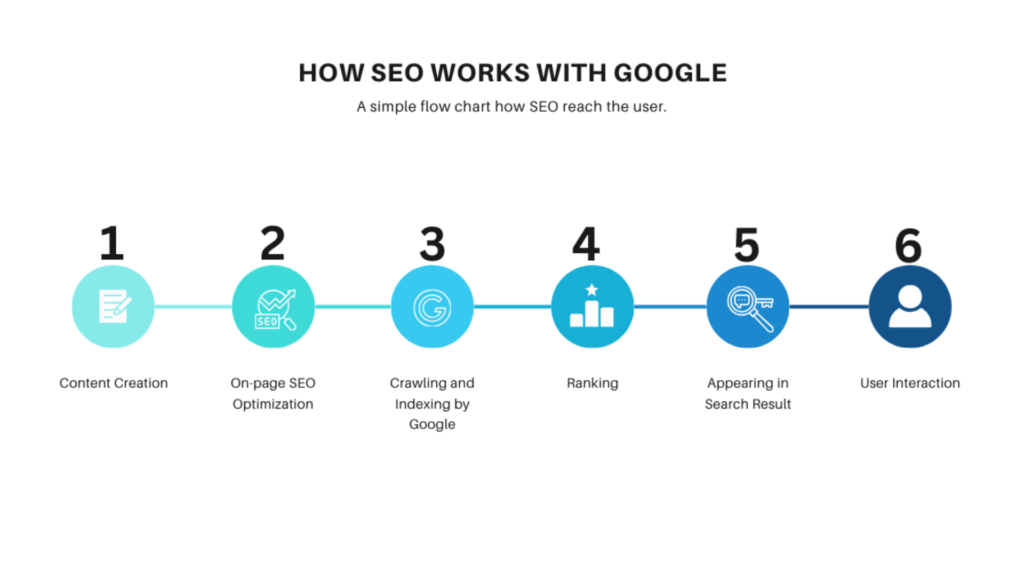
Key Components of SEO
SEO can be divided into three main categories: on-page SEO, off-page SEO, and technical SEO. Each plays a crucial role in improving your website’s visibility.
- On-page SEO Optimising the areas of your website that you have direct control over is the main goal of on-page SEO. This comprises:
- Keywords: Including the phrases that people are looking for in your content.
- High-quality content: Producing informative, insightful, and comprehensive articles or pages.
- The text that can be clicked in search results is known as title tags and meta descriptions.
- Headings: For clarity, arrange text using the H1, H2, and H3 tags.
- Internal links are those that connect one of your pages to another.
- Images: To improve load speed, add alt text and optimise image size.
- Effective on-page SEO enables search engines to comprehend the purpose and relevance of your page.

- SEO Off-Page
Off-page SEO involves actions taken outside of your website, such as:
Backlinks are links to your website from other websites. They function as “votes of confidence.”
Social shares: They assist you reach a wider audience even though they are not direct ranking considerations.
Brand mentions: Authority can be indicated even by unlinked mentions.
Writing content for other respectable websites in order to get visibility and links is known as guest blogging.
Consider off-page SEO as a means of enhancing the reputation of your website. Your website can rank better if it is more trustworthy.
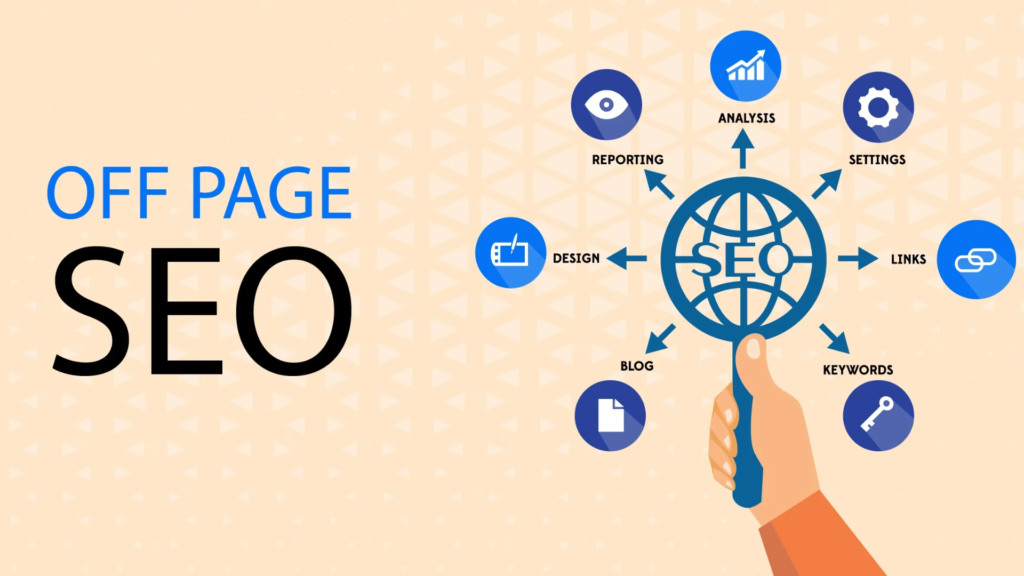
- Technical search engine optimisation
The ability of search engines to crawl and index your website is the main focus of technical SEO. It consists of:
Website speed: Websites that are quicker rank higher.
Mobile-friendliness: Since most consumers use their phones to browse, responsive design is crucial.
Secure connections (HTTPS): Google and users are concerned about security.
Code that improves search engine comprehension of your material is known as structured data.
XML sitemaps are files that direct search engines to your website.
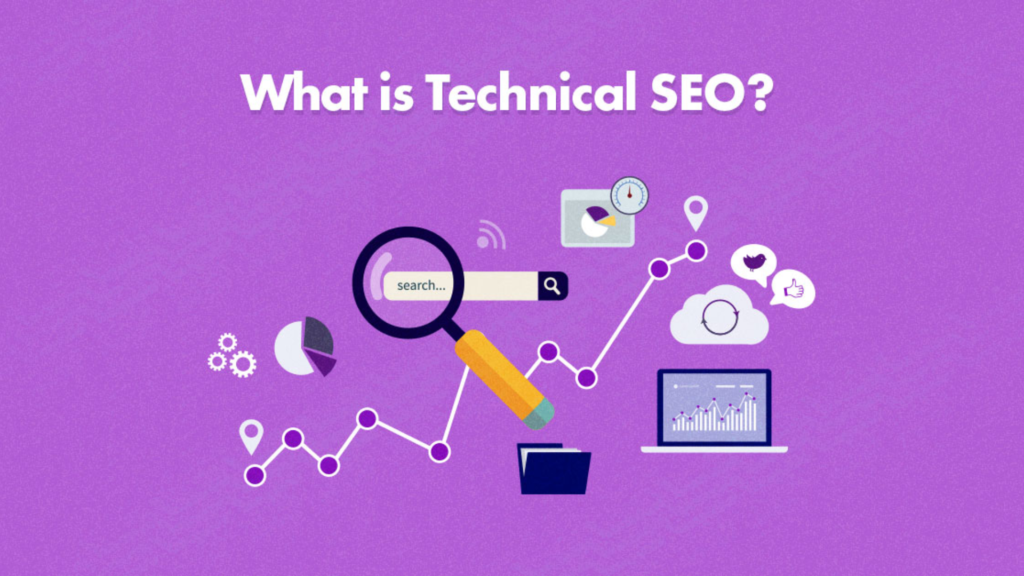
The Main Objective of SEO: User Experience
One of the most common misconceptions is that SEO is just about using keywords or algorithm-beating techniques. In actuality, search engines strive to offer the greatest user experience. Therefore, when you optimise your website for search engines, you are actually optimising it for users. Your website will function better if it offers a better user experience, such as quick loading times, useful content, and simple navigation.
Concluding Remarks
SEO is a continuous effort rather than a one-time event. It entails knowing how people search, producing useful information, and making sure your website is reliable, quick, and accessible. SEO becomes one of the most effective strategies for expanding your internet visibility when done properly.
Investing in SEO can help your audience find and trust you more quickly, regardless of whether you run a local business, an online store, or a blog. It’s the equivalent of giving your best effort each time someone looks for what you have to offer in the digital sphere.